We are committed to generating long-term value through sustainable and responsible practices.

We believe that environmental stewardship, the health and safety of our people, and meaningful community development are essential to the success and continuity of our business.

Double Materiality

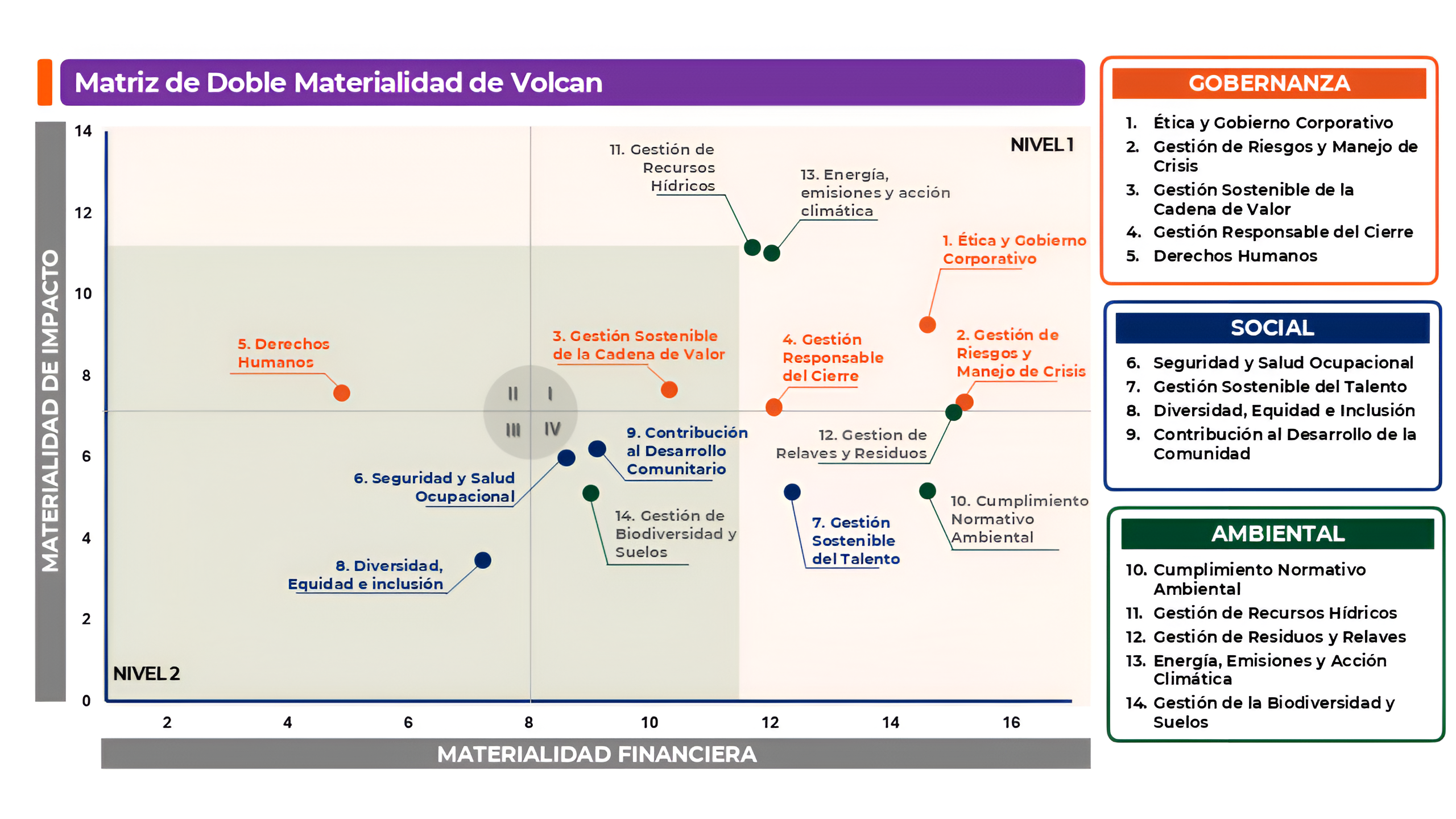
The Dual Materiality Study identifies and prioritizes the issues that reflect the organization’s most significant economic, environmental, social, and governance impacts, as well as those that substantially influence stakeholder decisions and the creation of long-term sustainable value. The analysis is conducted in accordance with the GRI 2021 materiality principles and the European Sustainability Reporting Standards (ESRS 1 and 2), integrating both impact and financial materiality approaches, in line with international best practices in ESG disclosure.

Methodology

The methodology combines internal document analysis with information from public sources and a participatory multi-stakeholder process. This process included 75 semi-structured interviews (with senior management, employees, unions, communities, government, suppliers, customers, banks, media, and academia), working sessions with the management team, a survey of 474 employees (95% confidence level and ±5% margin of error), and two focus groups (internal and external). This process allowed for the collection and weighting of thousands of thematic issues, ensuring representativeness, traceability, and analytical robustness for identifying issues of dual materiality.
CleanWork is Volcan’s environmental sustainability framework, designed to manage environmental risks by aligning with key ESG standards such as the ICMM principles and the ISO, GRI, GISTM and SASB frameworks, and contributing to the achievement of the SDGs.

Volcan is committed to achieving net-zero emissions by 2050 through a decarbonization plan that reduces greenhouse gas emissions in its operations and supply chain. We are driving renewable energy, energy efficiency, and technological innovation, acting as a catalyst in the transition to low-carbon mining and strengthening our resilience and competitiveness in the face of climate change.

Volcan maintains its commitment to manage and protect biodiversity through preventative management plans for soil, flora, fauna and wetlands, prioritizing the rehabilitation of affected areas, the rescue of threatened species and continuous monitoring to preserve ecosystems in its areas of operation.

We promote a productive and harmonious work environment, where professional development and well-being are fundamental. We implement strategies to retain key talent, optimize structures, recognize achievements in safety and values, and maintain risk prevention programs. 

We are proud that over 50% of our workforce comes from local communities, reaffirming our commitment to regional economic development.

Safety is our top priority. We foster a culture of prevention with the goal of ensuring that every worker returns home safely. The implementation of the SSOMAC Management System in our mining units and hydroelectric power plants strengthens our commitment to occupational health and safety, the environment, communities, and corporate governance.
We maintain open and collaborative dialogue with communities, seeking their holistic development. Through development programs, productive projects, and the strengthening of key areas such as education and health, we contribute to the well-being of neighboring communities. We respect their traditions and maintain a policy of transparency and participation.
We uphold the highest standards of corporate governance, ensuring transparency and accountability across all our operations.

Sustainability Report 2021

Sustainability Report 2022

Sustainability Report 2023

Sustainability Report 2024

Volcan reaffirms its commitment to Human Rights in all its operations, aligning itself with the principles of the Universal Declaration of Human Rights and the OECD guidelines. Our management focuses on preventing adverse impacts, ensuring an environment free from discrimination and forced labor, and maintaining channels of dialogue and redress with our communities and value chain.